the hidden environment: how staff spaces shape children’s experiences
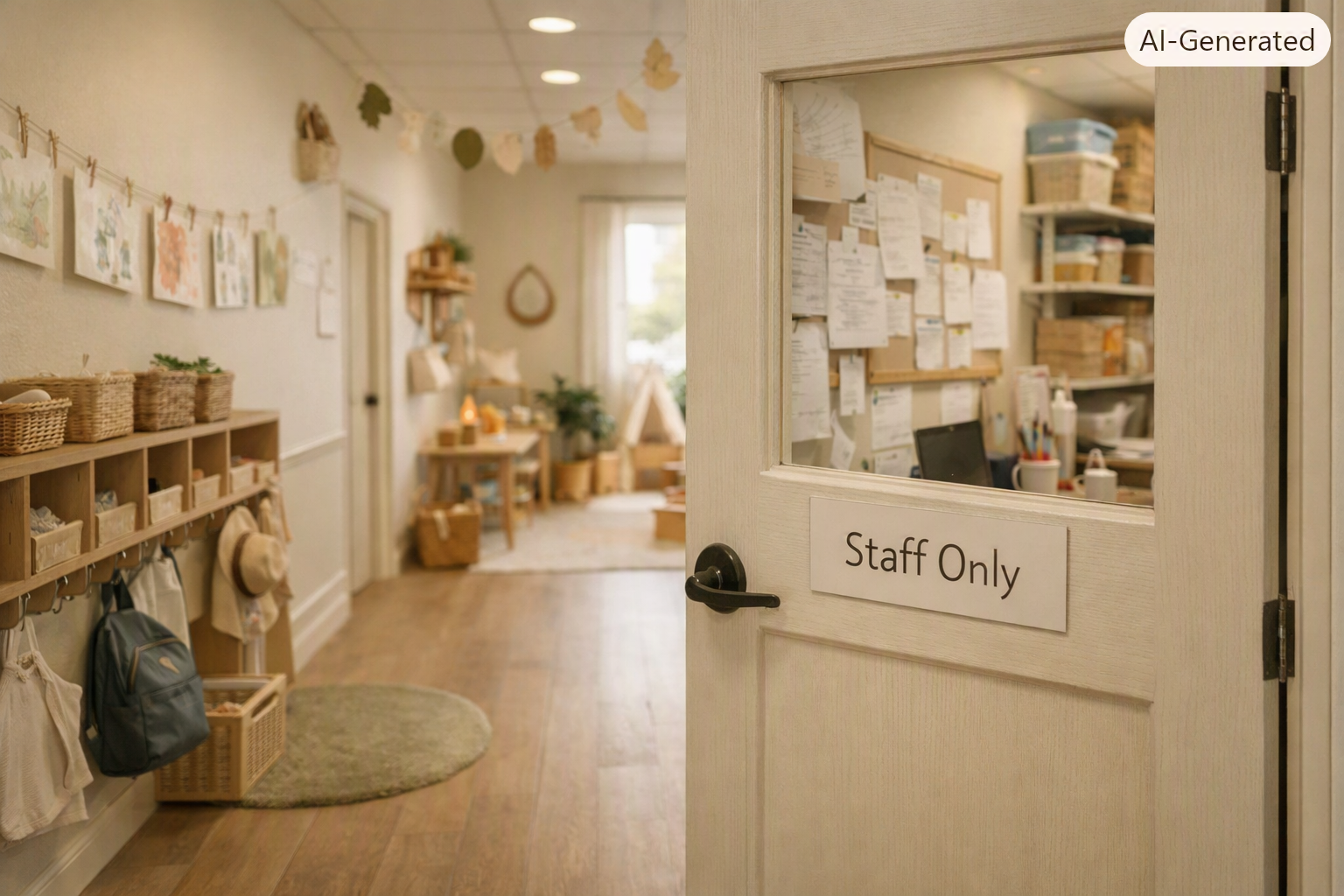
Countless hours are spent designing beautiful spaces for children, while far less time is devoted to thinking about the spaces where the administrative, teaching, and support staff work. Yet, the environment adults experience every day quietly shapes the entire program.
Every early childhood setting has an organizational climate, which “refers to how staff feel about working within the organization” and reflects the overall atmosphere staff feel as they move through their day.1 This climate is shaped by ten dimensions: collegiality, professional growth, supervisor support, clarity, reward systems, decision making, goal consensus, task orientation, physical setting, and innovativeness.2 Staff perceptions of these dimensions directly influence how they interact with the children in their care. As Whitebook, Howes, and Phillips caution, “By failing to meet the needs of adults who work in child care, we are threatening not only their well-being, but that of the children in their care.”3
Although our primary attention often goes to children’s spaces, creating a supportive, growth‑oriented environment for staff is just as essential. Like each of the other dimensions of organizational climate, physical setting plays a surprisingly powerful role. It shapes how staff feel, how they work, and how they connect with one another. In my conversations with directors and staff across the country about what an ideal early care and education program that truly meets staff needs looks like; several consistent themes emerge regarding the spaces where adults work.
Accessibility and convenience. Staff repeatedly note that when materials and equipment are stored in places that are inaccessible or inconvenient, they are far less likely to use them. When procedures require steps that are difficult, cumbersome, or time‑consuming, follow‑through drops. The design of the physical environment either supports staff in doing their best work or quietly gets in their way.
Areas that encourage collaboration. It is natural for staff to seek opportunities to talk with one another, exchange ideas, and build relationships. Both informal conversations and structured discussions are essential for maintaining strong professional connections. When programs lack a staff lounge or other designated spaces for adults to gather, they unintentionally limit opportunities for collaboration, problem‑solving, and mutual support. Finding other spaces that allow for collaboration is especially important when a staff lounge does not exist.
Calming elements. A growing body of research highlights the impact of calming environmental features on stress reduction, emotional regulation, and overall well‑being.4,5,6,7,8 For early childhood staff (whose work is both physically and emotionally demanding) access to soothing elements such as natural light, soft colors, plants, or quiet retreat spaces can make a meaningful difference in how they feel throughout the day. These features help create an atmosphere where adults can reset, recharge, and return to their work with renewed focus.
Comfort. Materials and equipment in early childhood programs are designed for children, which often requires adults to adapt physically (e.g., sitting in child‑sized chairs, working at low tables, bending over to reach a low sink, or repeatedly lifting children and heavy materials). While sitting at the children’s level supports maintaining eye contact, building connection, and encouraging communication, doing so all day without opportunities for proper ergonomic support can take a toll. Programs can reduce strain by offering spaces and tools that support adult bodies as well as children’s needs.
Little touches. Staff often mention that small, thoughtful details (such as inspirational quotes posted in shared spaces, fresh flowers in the staff lounge, or other simple aesthetic touches) help create a sense of warmth and care. These elements signal that the environment is meant for adults too, not only for children.
Natural elements. Incorporating natural materials such as wicker baskets, wooden furnishings, and plants throughout the program contributes to a calmer, softer atmosphere. Staff describe these features as grounding and soothing, helping them feel more at ease in their daily work.
Organized Storage. Each classroom uses a wide variety of materials throughout the day, and many programs rotate materials among rooms. When storage space is limited or disorganized, staff are less likely to access and use these materials. Well‑organized storage systems make it easier for staff to implement curriculum ideas and maintain a smooth workflow.
Personal Space. In many workplaces outside early childhood, staff have designated personal areas to store belongings or complete tasks. In contrast, some early childhood staff have only a hook behind a classroom door. Having a secure personal space such as a locker, lockable cabinet, or desk drawer provides peace of mind and a sense of professionalism. A small desk or workspace for planning and documentation is also highly valued.
Privacy. Children abound in early childhood settings, and staff spend most of their day surrounded by them in classrooms. Because teachers often must remain in ratio whenever they are not on break, having a dedicated space to step away during their break to make a phone call, take a brief reprieve, or focus on concentrated work is essential. Access to a private, quiet area helps staff decompress and can significantly reduce stress.
Resources. Staff appreciate environments that include tools to help them do their jobs well: examples include access to a computer with internet, a professional library, subscriptions to early childhood journals, and other materials that support ongoing learning and high‑quality practice.
Safety. Staff want to know they work in a place that prioritizes their safety. Clear precautions to reduce health risks and maintain a secure environment demonstrate a climate of care and respect.
Space that promotes conversations with families. Teaching staff frequently engage with families, and having a comfortable, private space for these conversations supports stronger relationships and more meaningful communication.
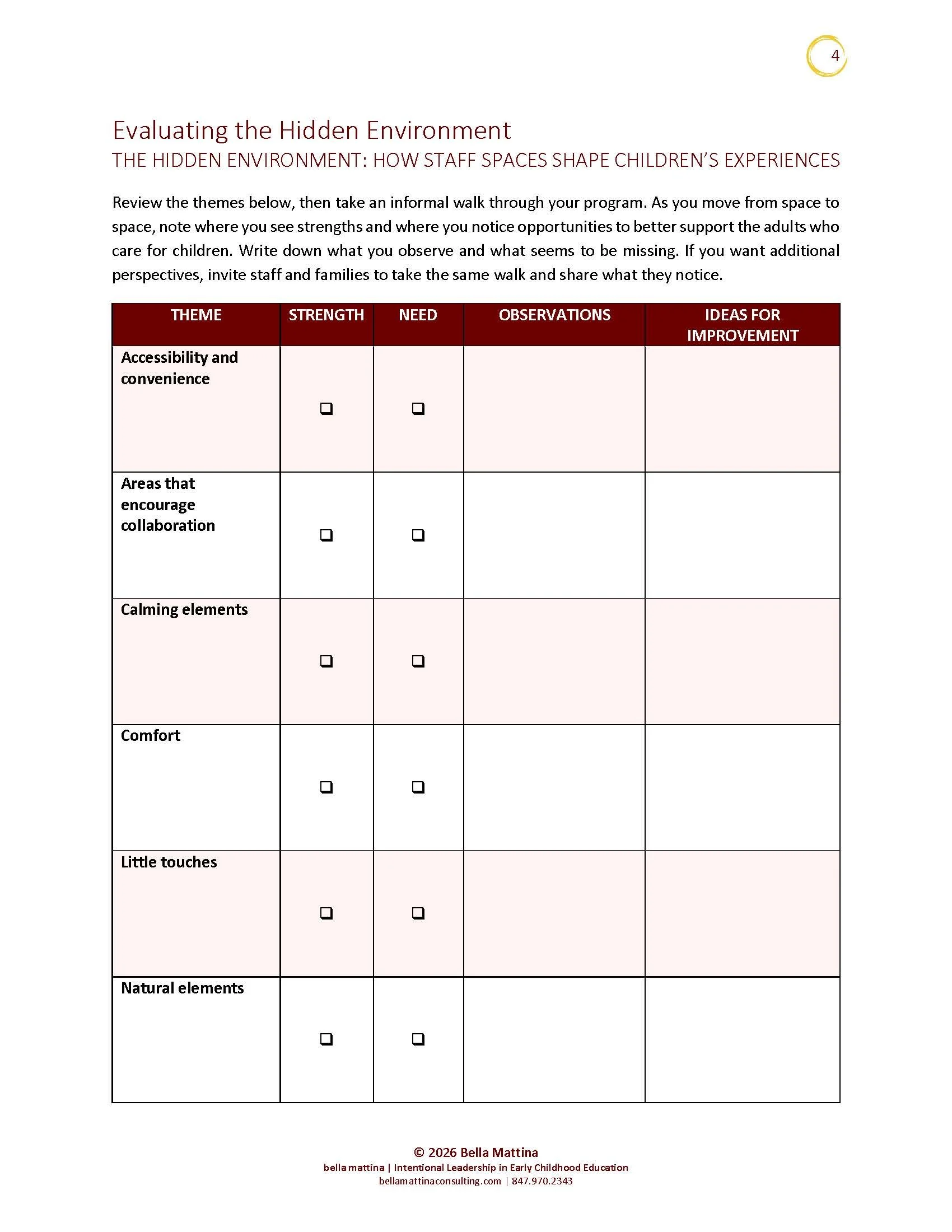
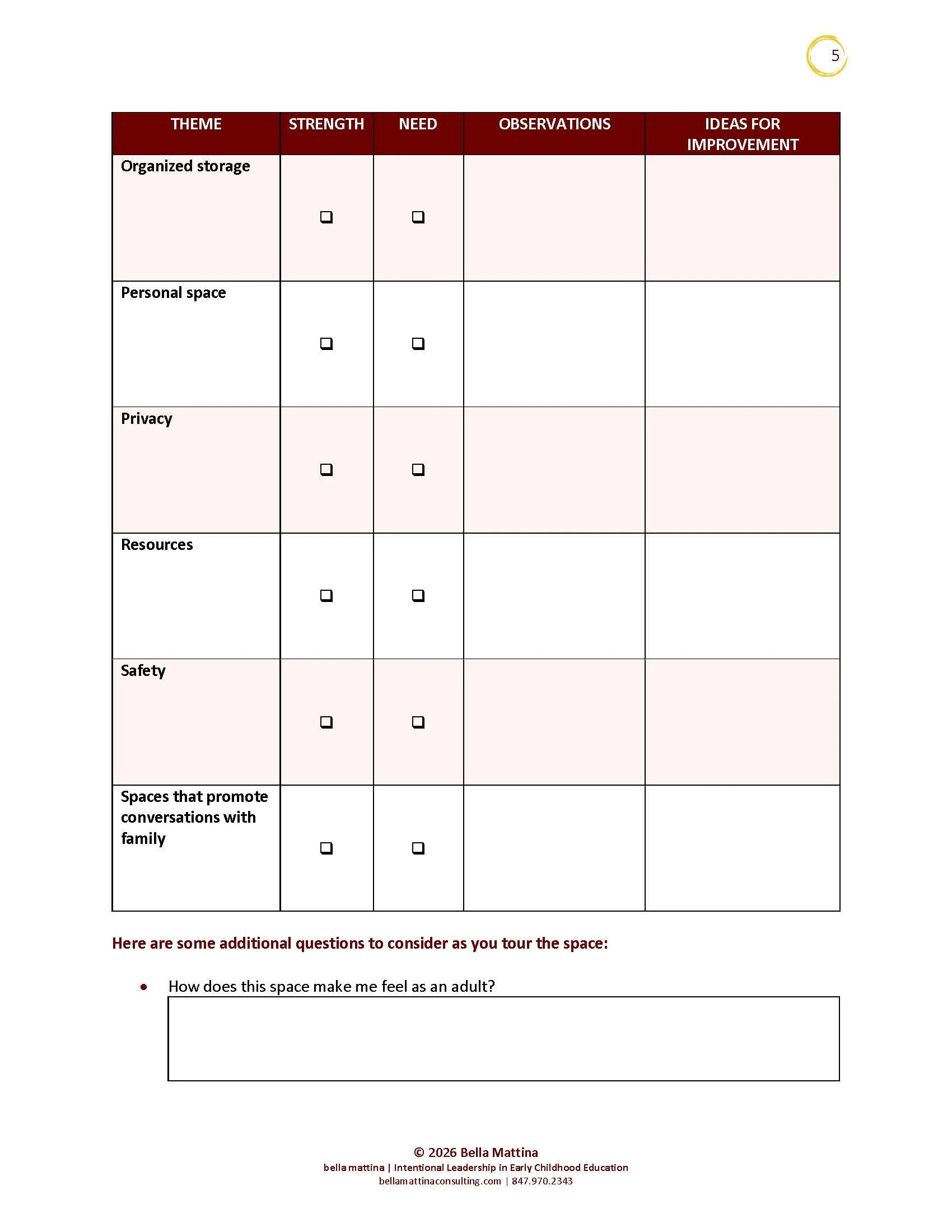
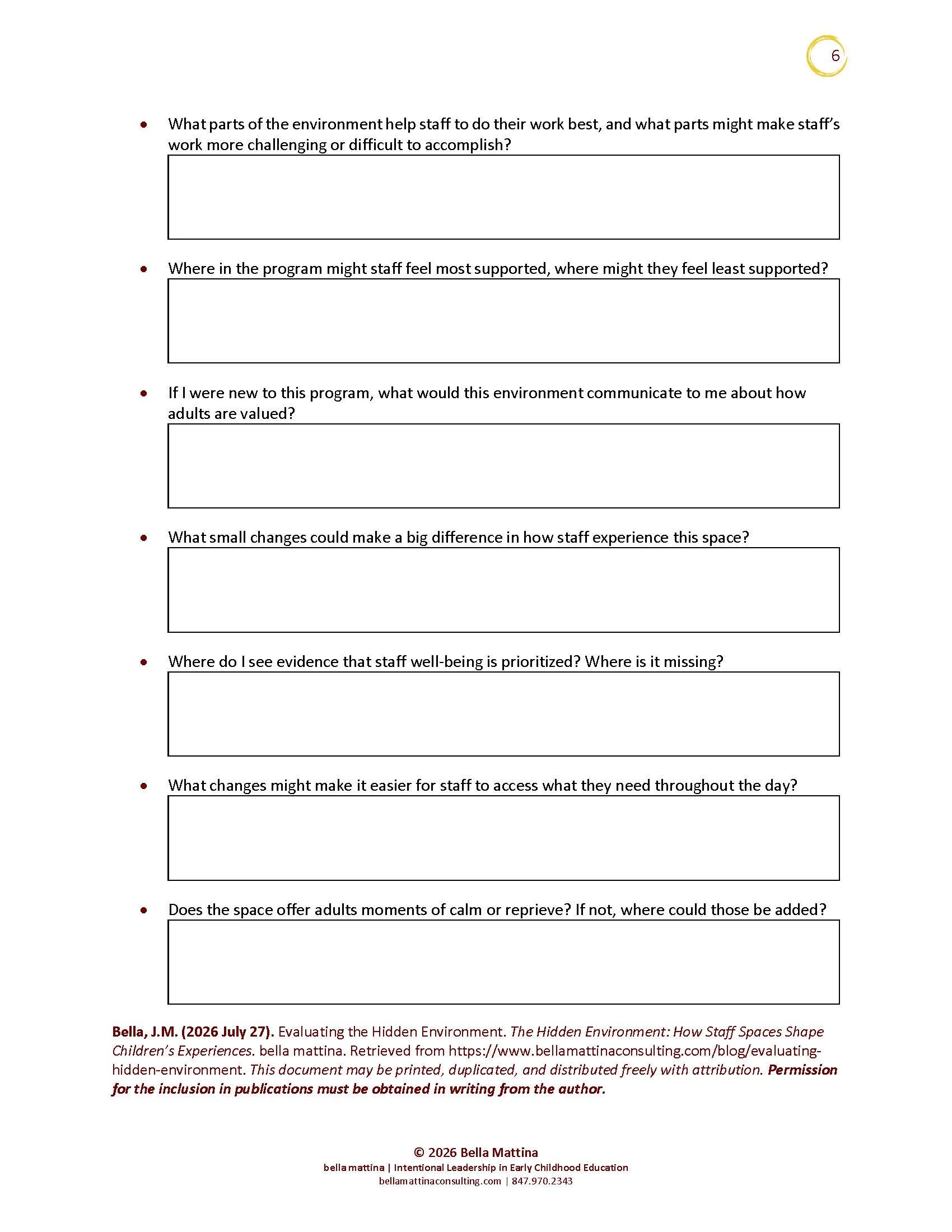
The following resource, Evaluating the Hidden Environment, will help you take a closer look at your program’s physical setting and identify areas that may benefit from change. Most people walking through an early care and education program focus on the children’s environment and overlook the one adults experience every day. Yet it is this hidden environment that quietly shapes staff well‑being and, in turn, influences children in significant ways.
REFERENCES
1Bloom, P.J., Bella, J.M., & Hentschel, A. (2026). A Great Place to Work: Creating a Healthy Organizational Climate (3rd ed.). Everbloom Learning.
2Bloom, P. J. (2016). Measuring work attitudes in the early childhood setting (3rd ed.). Everbloom Learning.
3Whitebook, M., Howes, C., & Phillips, D. (1989). Who Cares? Child Care Teachers and the Quality of Care in America. Final Report of the National Child Care Staffing Study. Child Care Employee Project.
4Searle, B., Sawyer, H., Staton, S., & Thorpe, K. (2026). Through the eyes of the educator: A ‘natural experiment’ to examine the pedagogical, physiological and emotional value of access to nature in early education workplace environments. Journal of Environmental Psychology, 112, 103052. https://doi.org/10.1016/j.jenvp.2026.103052
5Waite, S., & Pratt, N. (2021). Practitioner well-being and outdoor learning: A review of research. Journal of Outdoor and Environmental Education, 24(1), 1–18. https://doi.org/10.1007/s42322-020-00068-7 (doi.org in Bing)
7Choi, J.‑H., & Suk, H.‑J. (2026). Daylighting design for early childhood classrooms: Impacts on circadian rhythm, cortisol regulation, and learning environments. Building and Environment, 228, 109681. https://doi.org/10.1016/j.buildenv.2026.109681 (doi.org in Bing)
8McCormick Center for Early Childhood Leadership. (2023). Mindfulness, stress, and co‑regulation in early childhood settings: Supporting educator well‑being. National Louis University.
Interested in learning more? If you coordinate professional development for groups of directors, groups of coaches who work with directors, or trainers Bella Mattina provides professional development opportunities to meet your needs. Find out more about these and other trainings at https://www.bellamattinaconsulting.com
©Bella, J.M. (2026 July 27). The Hidden Environment: How Staff Spaces Shape Children’s Experiences. bella mattina. Retrieved from https://www.bellamattinaconsulting.com/blog/hidden-environment. This document may be printed, duplicated, and distributed freely with attribution. Permission for the inclusion in publications must be obtained in writing from the author.