
the intentional pause: emotional intelligence
Statistics indicate that only 36% of people are able to accurately identify their emotions in the moment. And, the average number of emotions a person experiences per day is 27. That is a lot to feel, and even more to miss if we are not paying attention.
Awareness is the essential first step for being able to regulate our emotions. When we recognize our emotions as they arise, we create the possibility of choosing our responses and engaging in healthier patterns of behavior. Without awareness, regulation is nearly impossible; with it, we gain the power to pause, reflect, and act intentionally.
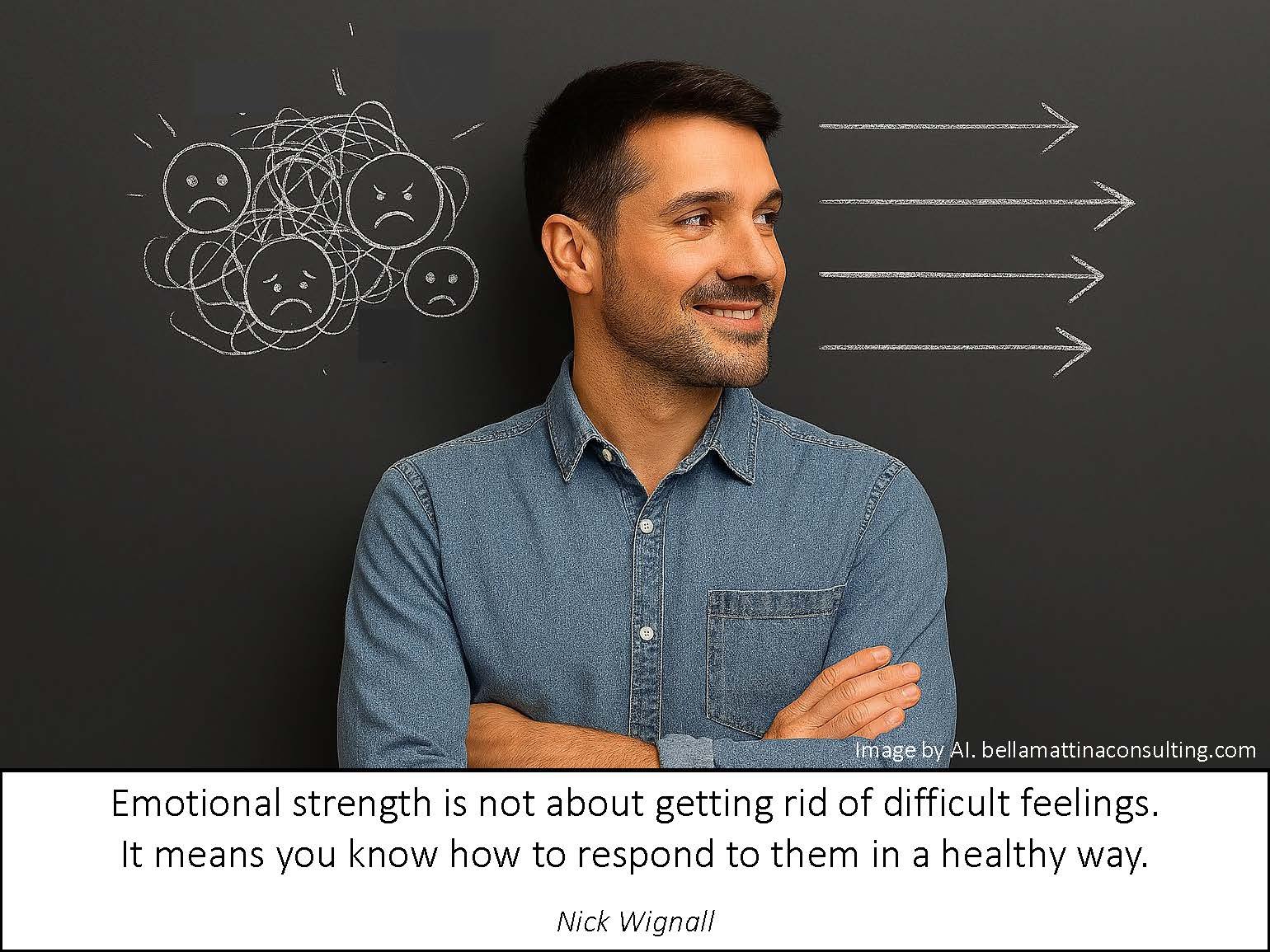
Emotional strength is not about getting rid of difficult feelings.
It means you know how to respond to them in a healthy way.
Nick Wignall
The questions that follow are designed to help you strengthen your emotional awareness and self-regulate—so you can notice what you feel, understand why it matters, and respond in ways that support your well-being and relationships.
Reflective Questions for Intentional Leaders
What mood did I begin the day with?
Be as specific as possible. Instead of “happy” consider whether the emotion was more accurately described as content, playful, optimistic, joyful, or hopeful. Refer to the Emotion Wheel for a list of possibilities.
In what ways did I use my emotions to set a positive, supportive tone with the team?
What were my emotional reactions to different situations at work?
If those situations happen again, would I want to change my emotional reaction?
If yes, why, how?
What else did I notice about my emotions?
If there was a need, did I self-regulate my emotions?
If so, did it help and how?
What did I notice about other people’s emotions?
Did I help regulate anyone else’s emotions today?
If so, what was the result?
REFERENCES
Bradberry, T., & Greaves, J. (2009). Emotional intelligence 2.0. TalentSmart.
Cowen, A. S., & Keltner, D. (2017). Self-report captures 27 distinct categories of emotion bridged by continuous gradients. Proceedings of the National Academy of Sciences, 114(38), E7900–E7909. https://doi.org/10.1073/pnas.1702247114
©Bella, J.M. (2025, December 2). Intentional Pause: Emotional Intelligence. Bella Mattina. Retrieved from https://www.bellamattinaconsulting.com/blog/Intentional-Pause-Emotional-Intelligence. This document may be printed, duplicated, and distributed freely with attribution. Permission for the inclusion in publications must be obtained in writing from the author.
Interested in learning more? Bella Mattina offers leadership training sessions designed for lasting change. Leading with Heart: An Overview of Emotional Intelligence and the Six Emotional Leadership Styles is available for groups of directors. A modified version for teaching staff is also available. Contact bellamattinaconsulting@gmail.com if you are interested. Here’s a description:
When adults who care for children are stressed and their emotional needs are not being met, the quality of their interactions with the children in their care are likely to suffer. Leaders of early care and education programs must be keenly in tune with their own emotions and the emotions of their staff in order to create the conditions in which children learn best. This session will help leaders become more in touch with emotional triggers, and the four emotional intelligence domains. Leaders will also learn strategies for developing their individual skills in each domain.
Identify the four domains of emotional intelligence
Practice recognizing emotions and triggers
Explore strategies for building staff awareness of emotions
Experiment solving everyday challenges using strategies for self-awareness, self-regulation, social-awareness, and social regulation
Learn the 6 styles of emotional leadership